Detecting the Unseen
SummaryThe question and the answer in plain words

The study

Explore

The paper

Preliminary All the results on one page

Detectingthe Unseen

Will AI traders learn to manipulate a market on their own? And will our detectors recognise what they learn?

Ebrahim · Habs Research Scholarship project

A new question. The same standard of evidence.

The project now asks what a learning trader does when rewarded for execution quality, and whether existing detectors recognise the resulting behaviour. The new pilot uses independent learners, unseen test sessions, complete trade accounting and matched controls. Read the measured result and replay the learning.

This is a restricted replication and detector-transfer study. Earlier research already demonstrated learned spoofing. The new chapter explains what this experiment adds, what it cannot establish, and why an alert alone is not a discovery.

The detector foundation stays.

The results below test human-designed spoofing and detector evasion. They explain the surveillance systems used in the new study; they are not evidence that the new learner discovered those strategies.

Inspect the new results

The earlier finding: unusual trading is not proof of manipulation.

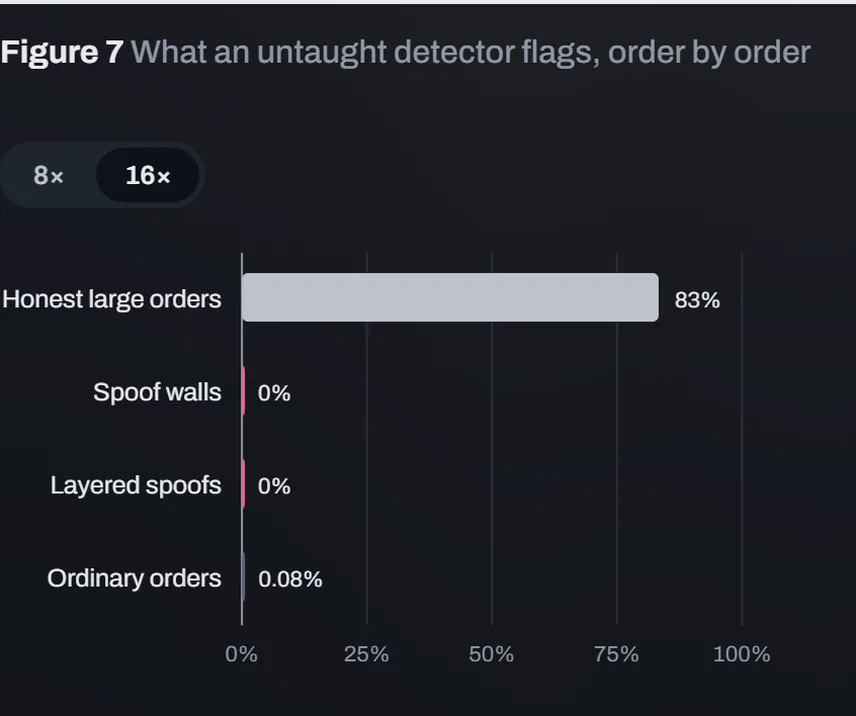
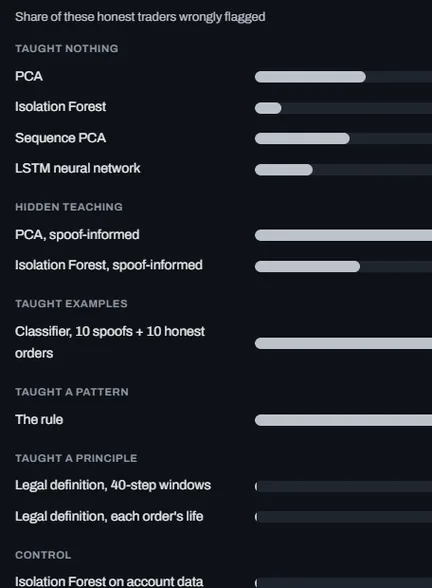
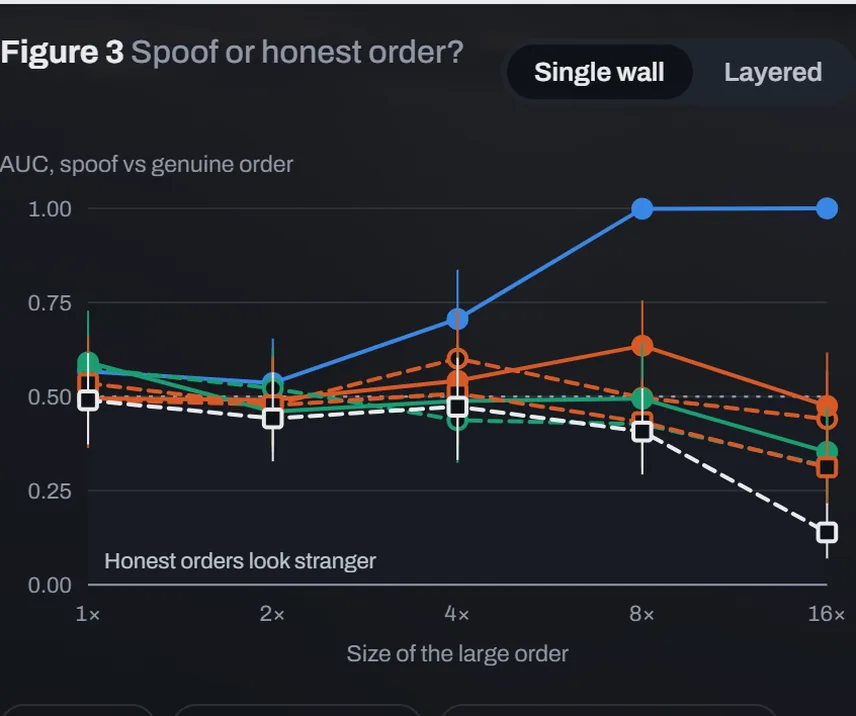
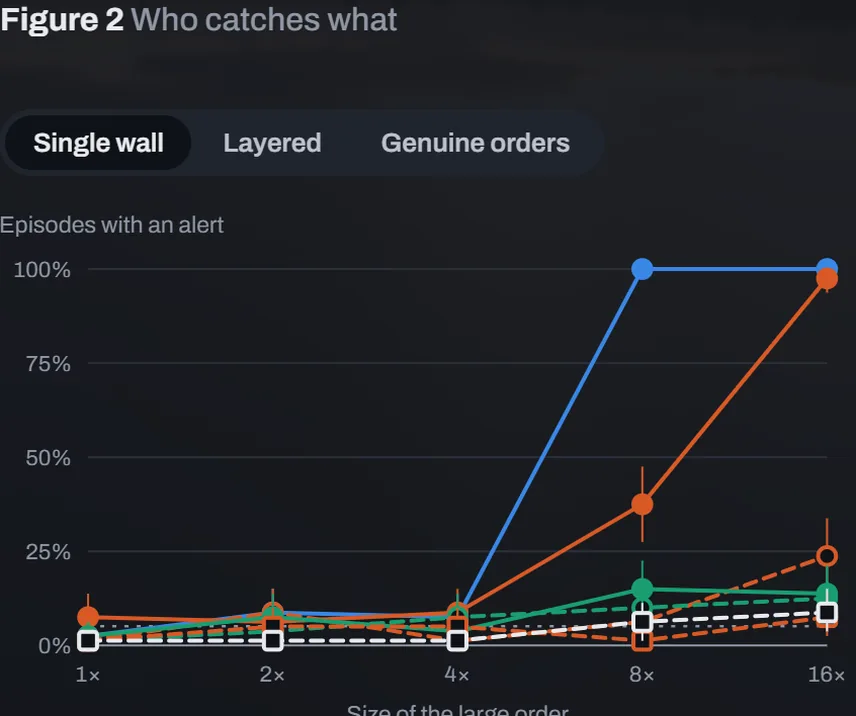
Spoofing means placing large orders you never intend to trade, so that other traders misread supply and demand. Real examples are rare and hard to label, which makes one idea attractive: train a detector only on normal trading and let it flag whatever looks unusual. This project tests that idea in a simulated market where spoofing measurably works, with seven detectors ranging from a hand-written rule to an LSTM neural network. The detectors that were never told what spoofing looks like could not tell a spoof from an honest large order, in five different markets and even when they examined individual orders. They found the honest orders more unusual, because a spoof is unusual only in its size, while its quick cancellation looks like ordinary market-making. The one signal that separated them, a large order cancelled quickly, came from what the detectors were told, and it stopped working as soon as the same spoof was split into smaller pieces. A second experiment asked what kind of teaching does work. Examples and patterns teach what spoofing looks like, and fail the same way. A detector built only from the legal definition, which asks whether a trader showed interest it then withdrew while trading the other way, caught both kinds of spoof without a single example and flagged no honest large orders. What it cannot do is tell a spoof from an honest change of mind: that takes intent, which no data shows.

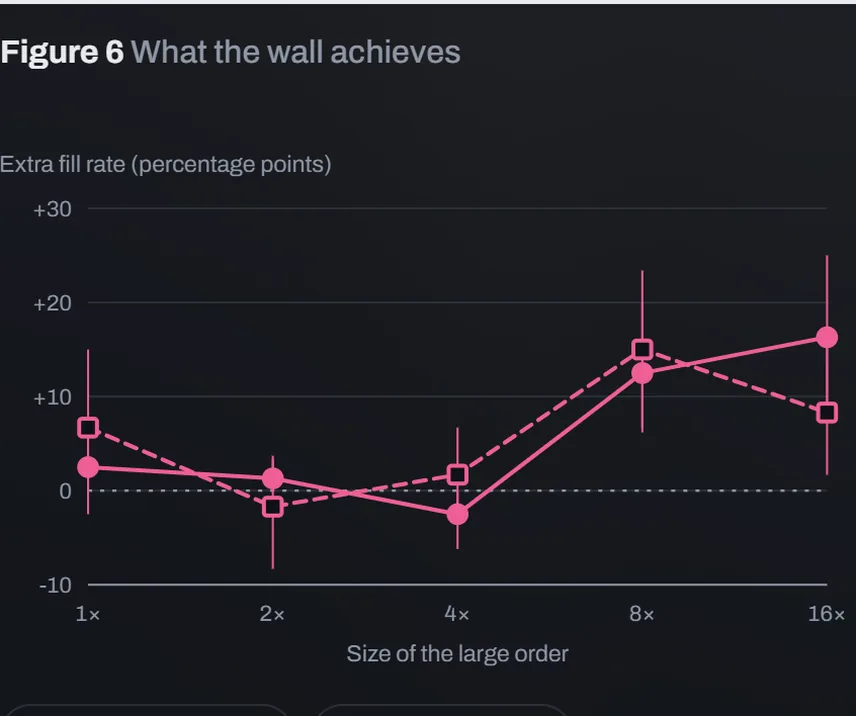
  1. + pointsmore chance that the spoofer's genuine order fills when an 8× fake wall is up. The spoofing works.
  2. AUC for the LSTM neural network telling spoofs from honest orders of the same size. 0.5 means no difference; lower means the honest orders looked stranger.
  3. to the rule's catch rate, before and after the same spoof was split into four smaller orders.
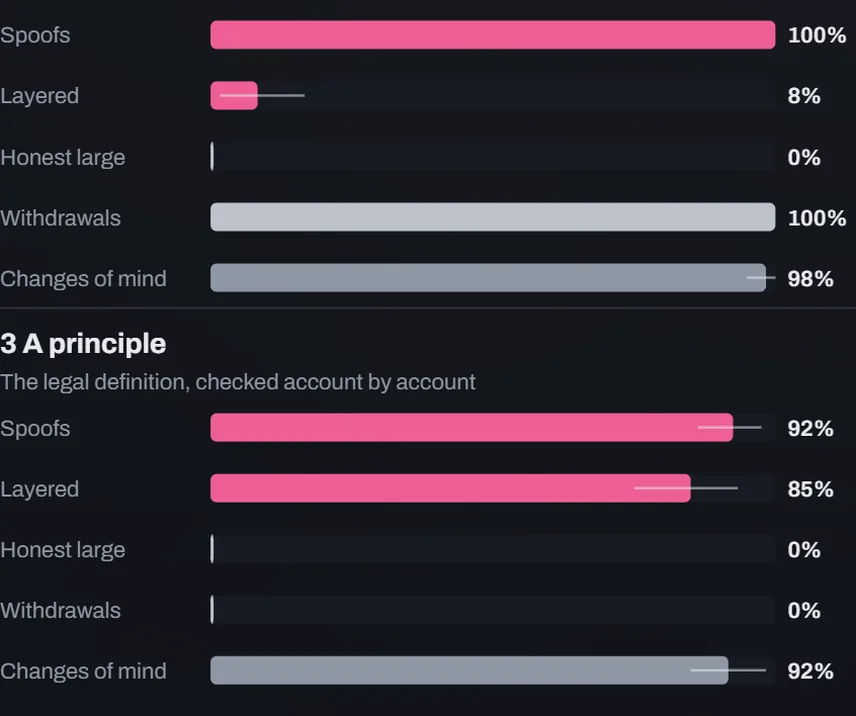
  4. of those layered spoofs caught by a detector given only the legal definition and no examples, while it flagged of honest large orders.

Watch one spoof

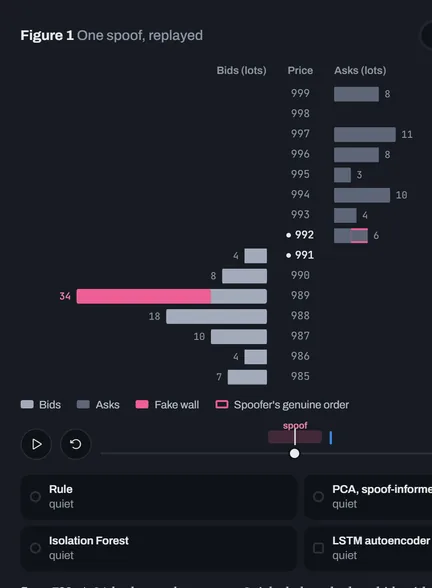
A real episode from the simulation, rebuilt order by order. Scroll, and the replay follows.

An ordinary market

Bids wait on the left and asks on the right. Each bar is the number of lots waiting at that price. Some traders read this book to judge supply and demand.

The wall goes up

The spoofer adds a large buy order just below the best bid, and a small genuine sell order at the best ask. The large order is not meant to trade.

Traders lean in

The bid side now looks heavy, so book-reading traders lean towards buying. That is the whole trick.

Filled, then gone

The genuine sell order fills. In the same step the wall is cancelled, having never traded.

Who noticed?

Only the hand-written rule, because it was told that a large order cancelled quickly is suspicious. Now switch to Layered: the same lots in four smaller orders.

Figure 1 One spoof, replayed

Step 0
Rulequiet
PCA, spoof-informedquiet
Isolation Forestquiet
LSTM autoencoderquiet
Loading the replay.

A working spoof is built to look ordinary in every way but one. A detector that hunts for the unusual finds honest traders first. A detector that knows what the offence is for finds the spoofer, and still cannot read a mind.

Four findings

01

Part 1

Unusual is not the same as dishonest

Seven detectors that only learned normal trading could not tell a spoof from an honest order of the same size. The LSTM scored an AUC of , where 0.5 is a coin toss.
See the results
02

Part 1 and 2

Rules and examples learn the look

The hand-written rule caught of large spoofs and once the same spoof was split into four. A classifier shown examples failed the same way.

How teaching works
03

Part 2 and 3

The law finds the purpose

A detector built only from the legal definition caught of split spoofs with no examples and flagged of honest large orders. Dodging it costs the spoofer its gain.

The ladder of teaching
04

The limit

Some honest traders look exactly like spoofers

A trader who changes their mind does what a spoofer does. Spoofs against changes of mind scored an AUC of : the data shows a false signal, never the reason for it.

What it means

Every number
is a test

Over a thousand simulated trading sessions, seven detectors and a dozen honest and dishonest situations. Every figure on this site is drawn from the experiments' own results files, and every one can be rebuilt from the code.

The study

  1. 01Will AI traders learn manipulation?Six AI traders learn to fill orders; does any of them discover spoofing, and do the detectors notice?
  2. 02The experimentA simulated stock market where spoofing measurably works, and seven detectors that never see a spoof.
  3. 03ResultsSpoofs against honest look-alikes, legitimate volatility, other markets, and every order one by one.
  4. 04What kind of teaching works?Examples, a pattern or the law itself, and what it costs a spoofer to dodge the law.
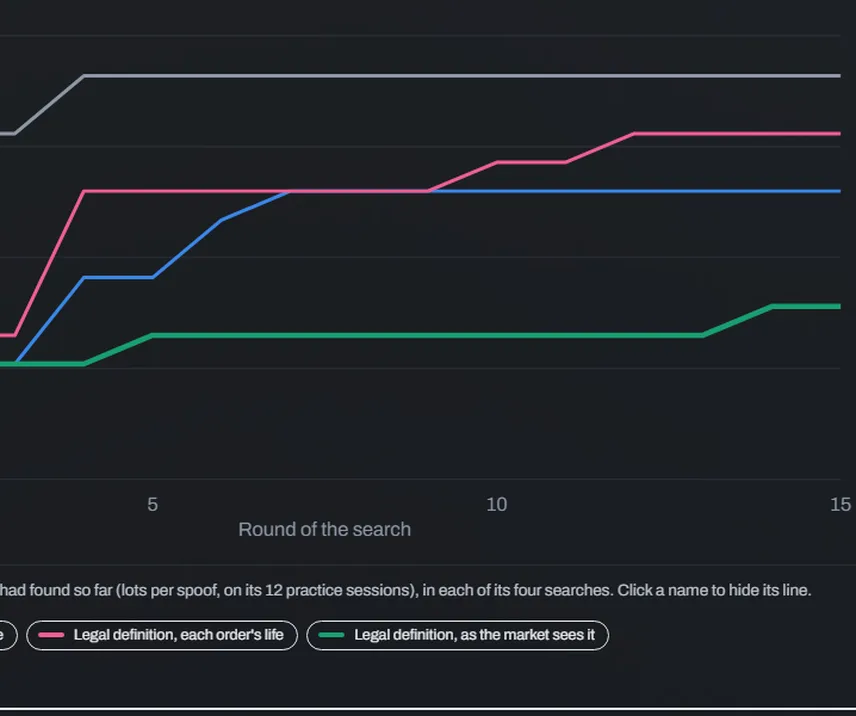
  5. 05An AI challengerA search program hunts for spoofs the law-based detector misses, and a surveillance desk counts its alerts.
  6. 06What it meansThe answer to the question, what it does not show, and the sources.
  7. 07ProgressWhere the project stands, the lab notebook and the plan for Sixth Form.